Metamorphic Rocks
Metamorphic rocks are rocks which have been subject to high pressure and high temperatures. Sometimes the rocks also are exposed to the influence of high pressure and high temperature fluids moving through their pore spaces. These environmental effects result in a transformation of the rock's internal structure (grain size, shape, distribution) and their assemblages of minerals. They are transformed into denser rocks through a compression or infilling of any pore spaces and a change in minerals from lower to higher density compounds that are stable at higher pressures and temperatures.
Any rock can undergo metamorphism: igneous, sedimentary, and even existing metamorphic rock.
These metamorphic transformations can be brought about by
- deep burial by:
1) subduction
2) faulting
3) continued deposition of overlying sediment
- compression by faulting and folding (often due to tectonic activity: collision of two continental masses, for example)
- emplacement of magma and lava nearby
Each of these situations results in different combination of temperature and pressure, and each of these combinations produces diferent effects within the protolith (the original rock being altered).
Mineral Alteration
The important distinction between metamorphic and igneous rocks is that the protolith (rock being metamorphosed) is NOT melted.
Rather, the high temperature and pressure causes a re-organization of the silica tetrahedra and a re-distribution of other ions and atoms so that new minerals are formed. All of this happens in the solid state. Generally, the new minerals are stable at higher pressures and temperatures, but the changes do not just match the Bowen's reaction series in reverse, since no melting takes place.
This re-organization of mineral structure happens at the atomic level and is facilitated by the addition of kinetic energy from the high temperatures and the stresses on the molecular structures brought about by the high pressures.
Other Changes
1) Crystal Growth. Many metamorphic reactions result in crystal lattices growing as ions and molecules re-organize. Crystals and grains also become more interlocking as they grow into void spaces.
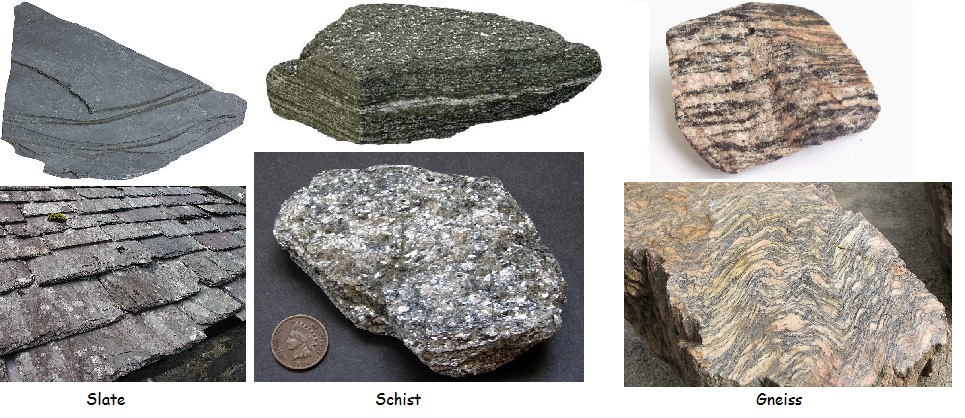
2) Foliation. Phyllosilicate minerals and other minerals with platy mineral structures tend to orient themselves such that flat mineral structure is oriented perpendicular to the direction of stress. For example, if there is a downward directed pressure, flay clay and mica minerals will orient themselves so that the silica sheets are horizontal. This foliation causes the rock to become fissile; exhibit a tendency to break into flat sheets.
Read this University of Saskatchewan link on the development of foliation
3) Banding. This is another form of foliation where, under the effect of directional pressures, minerals tend to separate out into layers of different minerals. This gives the rock a banded or stripey appearance.
Textural Changes
Foliated metamorphic rock
Foliation forms when pressure squeezes the flat or elongate minerals within a rock so they become aligned. These rocks develop a platy or sheet-like structure that reflects the direction that pressure was applied in. Slate, schist, and gneiss (pronounced 'nice') are all foliated metamorphic rocks that develop from silstone, shale, and thinnly interbedded sandstones with shale or siltstone. As the metamorphic process progresses with increasing heat and pressure, the foliations in schists develops into distinct banding in gneisses where thicker layers of alternating dark and light minerals separate out within the rock. This is still taking place in the solid state.
Non-foliated metamorphic rock
Non-foliated metamorphic rocks do not have a platy or sheet-like structure. There are several ways that non-foliated rocks can be produced. Some rocks, such as limestone are made of minerals that are not flat or elongate. No matter how much pressure you apply, the grains will not align! Another type of metamorphism, contact metamorphism, occurs when hot igneous rock intrudes into some pre-existing rock. The pre-existing rock is essentially baked by the heat, changing the mineral structure of the rock without addition of pressure, or at least any sort of preferred pressure direction.

Mineral Changes
Index Minerals
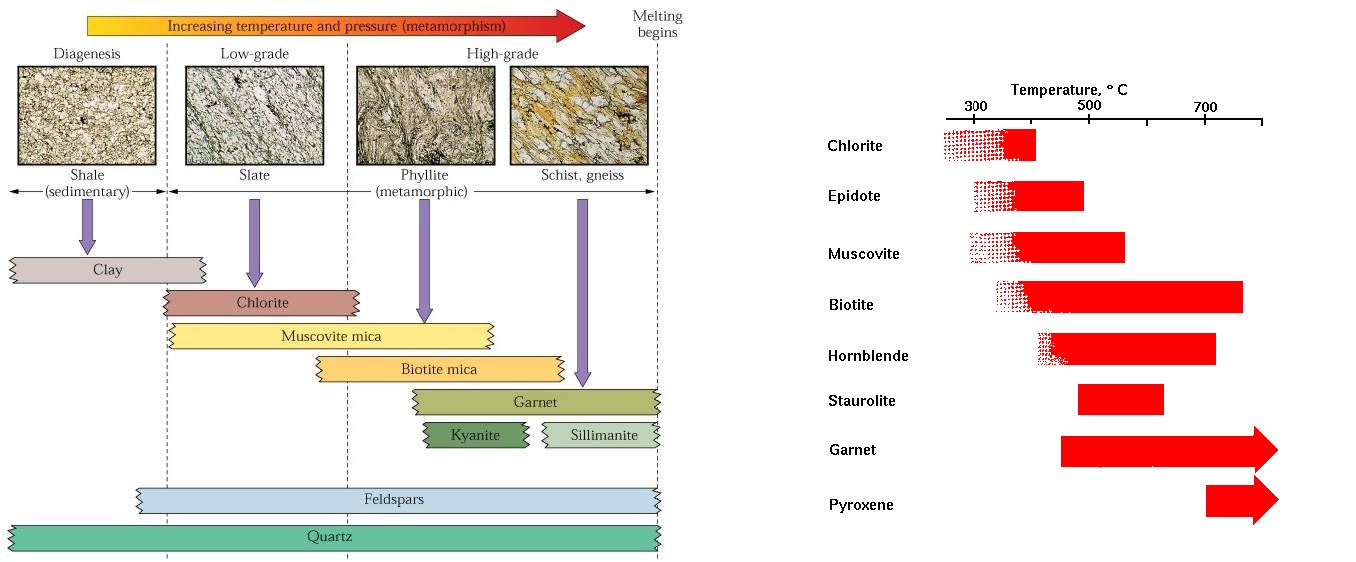
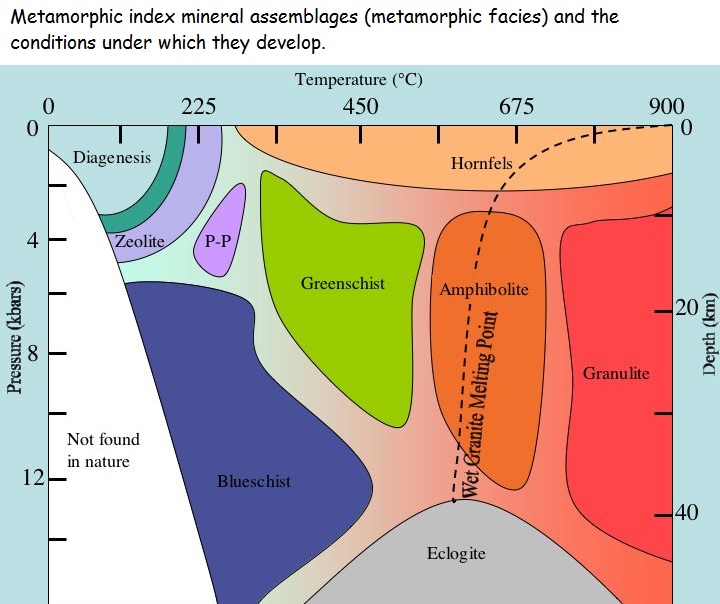
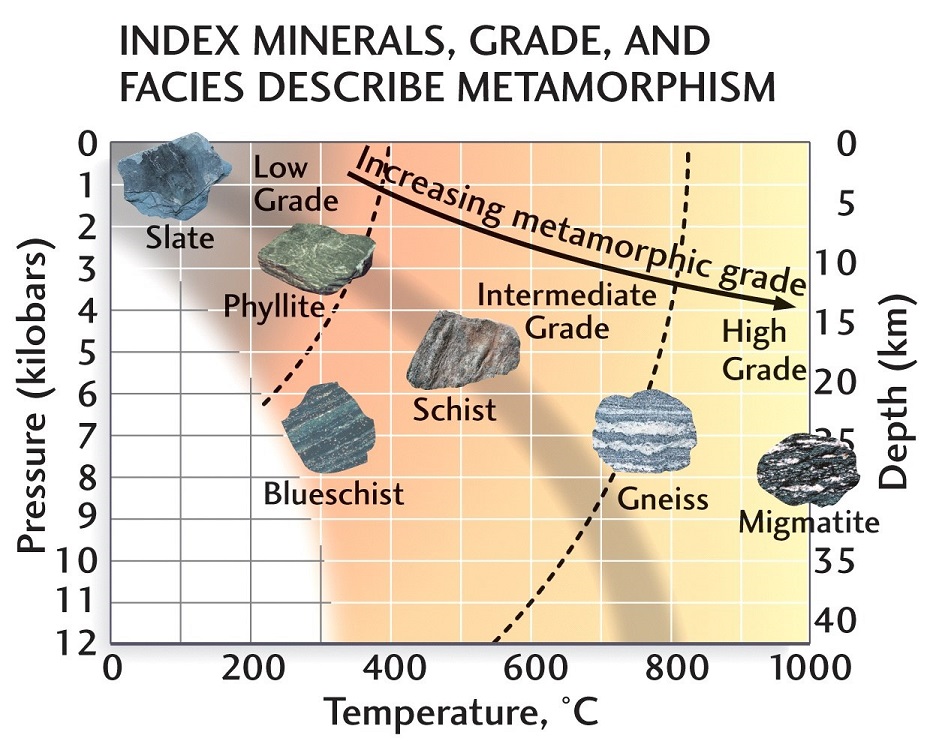
There are a whole set of different minerals that form as heat and pressure act upon the protolith rocks. Many of these mineral (or, more often assemblages of minerals) are diagnostic for certain pressure and temperature conditions. They are used as index minerals for those conditions. Their presence can be used to determine the maximum pressure and temperature that a body of rock has experienced. In the case of regiona metamorphism (see below) they can be used to distinguish between different tectonic settings. They also can be used to estimate how deep a rock body has been buried before erosion and uplift have brought it back up to the earth's surface.
Thus, these mineral assemblages serve as metamorphic "geothermometers" and "geobarometers." It should be noted, however, that the specific minerals that can form under any set of conditions also depends on the minerals that are present to begin with in the protolith. If the necessary elements for any mineral are not present, that mineral cannot form no matter what the conditions.
We won't worry about the specific minerals involved, but the following graphs demonstrate the range of conditions that can be distinguished using these index metamorphic mineral assemblages (also called "metamorphic facies").
Types of Metamorphism
Contact Metamorphism
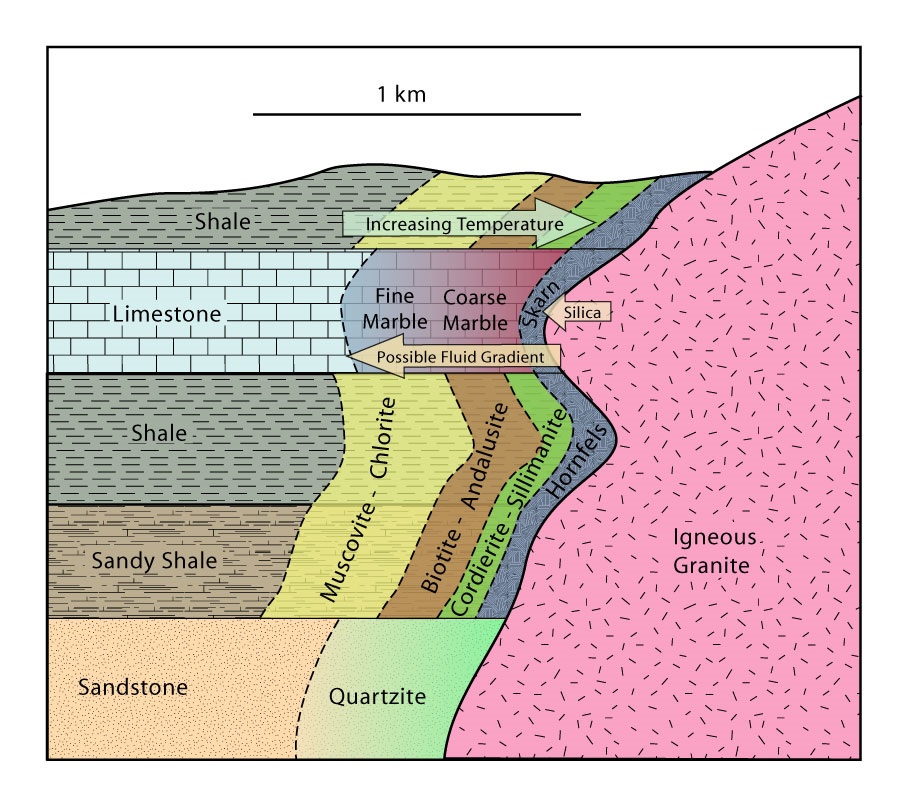
This style of metamorphism occurs when magma is intruded into a rock body or lava flows across the bedrock at the earth's surface.
This represents high temperature, usually low pressure metamorphism. It would correspond to the hornfels assemblage of minerals in the graphs above.
The high temperature molten rock produces a graded zone around the magma called a metamorphic aureole. The most intense mineral and textural alteration occurs at where the magma and protolith meet and the aureole becomes successively less altered away from the point of contact.
Regional Metamorphism
This is where large bodies of rock are buried and subjected to pressure and temperature alteration over a large scale.
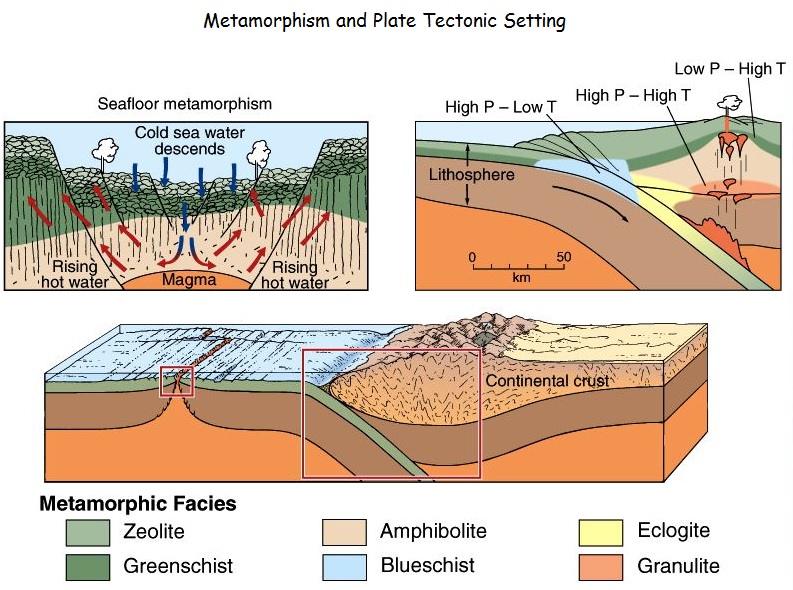
Deep burial of rocks within a tectonic plate produces a progression from slate to schist to gneiss as both pressure and temperature increase (see "minerals, grade, and facies graph above). This type of metamorphism occurs when mountain building (such as occurs at convergent plate boundaries) causes deep roots of crustal material to be pushed down into the mantle or when deep layers of sediment push the crust downward under their weight. Later erosion and uplift can cause these metamorphic rock to be uplifted to the surface. Much of the canadian shield consists of this type of rock, including the 1.5 billion year old metamorphic rock outcrops found in Kanata. Most of the lower part of the crust consists of this type of rock.
At convergent plate boundaries, the subducted crust experiences high pressure as it is dragged down into the mantle, but because rock is such a poor conductor of thermal energy, the rock may not experience very high temperature. If the rock is uplifted by erosion and brought to the surface before it has a chance to heat up, then we would see high temperature, low pressure minerals assemblages corresponding to the blueschist metamorphic facies.
Thus, the style of metamorphism allows geologists to infer the tectonic setting in which a metamorphic rock was formed.
Suggested Reading
Earth Science Grid: metamorphic rocks.
physicalgeography.net: metamorphism.
An animation of metamorphic rocks forming.
University of Saskatchewan: metamorphic rocks.
Practice
Test your knowledge of the formation of metamorphic rocks.
Try this quiz.
Practise your identification of metamorphic rocks skills.
Resources
1) http://csmres.jmu.edu/geollab/Fichter/MetaRx/
2) http://www.physicalgeography.net/fundamentals/10g.html